








Ever eaten something and your body gives you a gentle (or not so gentle) nudge… that wasn’t quite it?
Not in a dramatic, ambulance-worthy way. Just enough to notice. A bit of bloating after dairy, a headache that creeps in later, or that heavy, slightly uncomfortable feeling that lingers longer than it should. Sometimes it feels like your body is throwing up little stop signs everywhere.
It’s easy to label all of this as an allergy. But most of the time, it isn’t. And knowing the difference can save you from unnecessarily cutting out half your diet.
Intolerance
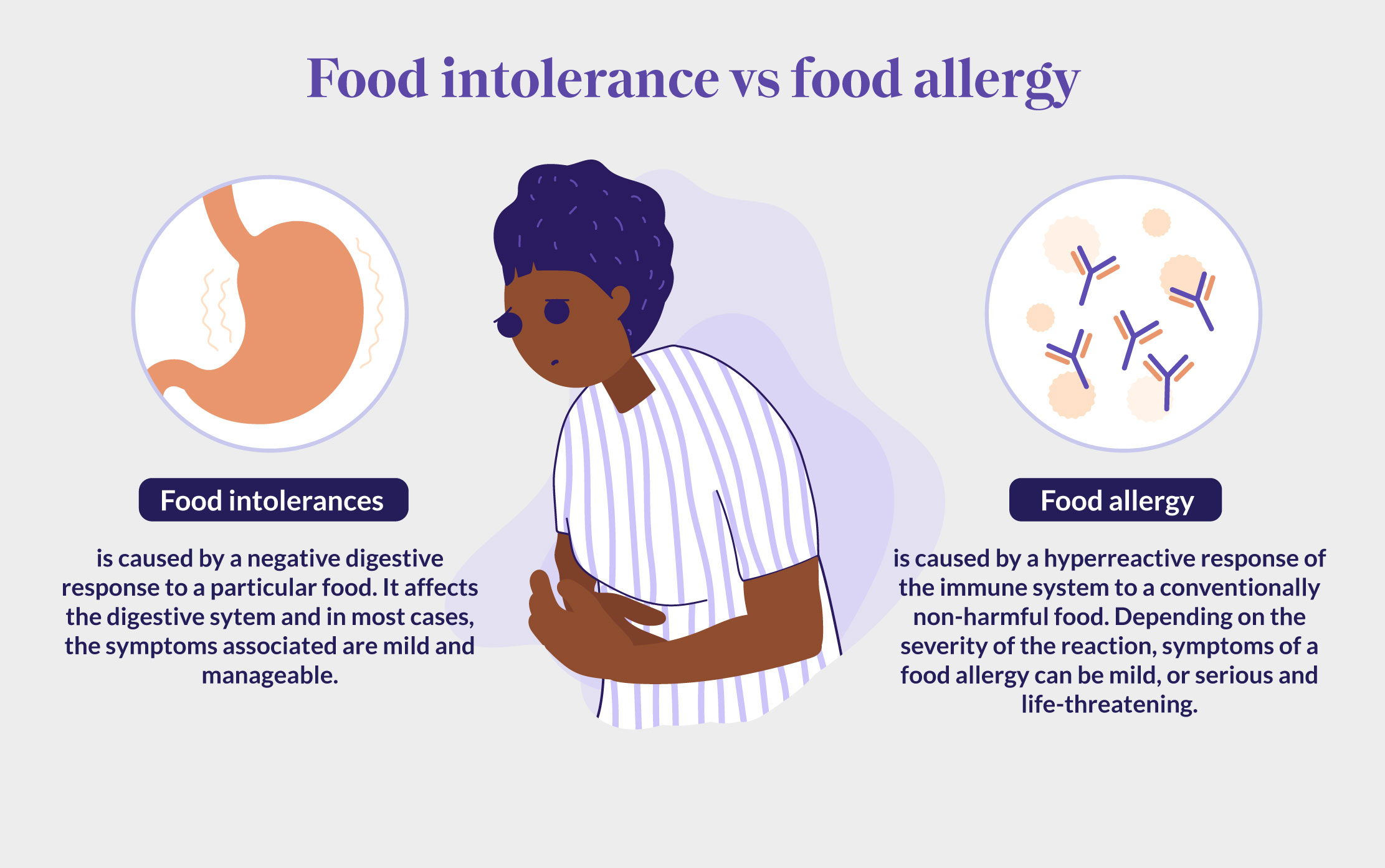
Food intolerances are far more common than true allergies, but they’re also the ones that tend to be harder to pin down. They’re less about the immune system and more about how your body processes a food. Sometimes it’s a digestive issue, like not having enough of the enzyme needed to break something down properly. Other times it’s more about sensitivity, or the overall state of your digestion at that time.
This is why intolerances don’t always follow a neat pattern. You might be absolutely fine one day, then notice symptoms the next. A small amount might sit well, but more than that tips things over. They’re often dose-dependent, and they’re often delayed, which is what makes them so easy to second-guess.
Some of the more common culprits here are things like dairy (lactose), gluten or wheat, caffeine, alcohol, and certain naturally occurring compounds in foods like onions, garlic, and legumes. It doesn’t mean these foods are “bad” – just that some bodies handle them better than others, or better at certain times.
For some people, it shows up as bloating or digestive discomfort. For others, it might be headaches, fatigue, brain fog, or skin flare-ups. Nothing overly dramatic, but enough to make you feel a bit off. It’s also worth remembering that intolerances can shift. They’re influenced by things like stress, sleep, gut health, and overall load on the body. When those things are under pressure, your tolerance for certain foods can drop. When things are more balanced, you may find you handle them just fine again.
Allergy
A true food allergy is a different situation altogether. This is where the immune system is involved. The body mistakenly sees a food, usually a protein, as a threat and reacts to it. These reactions tend to happen quickly, often within minutes, and can include swelling, hives, breathing changes, nausea, or vomiting.
Even a very small amount of that food can trigger a reaction, which is why allergies need to be taken seriously and properly diagnosed. Unlike intolerances, allergies aren’t dose-dependent in the same way, and even very small amounts can trigger a reaction. The response is more immediate and more consistent, which is often what makes them easier to recognise.
The most common food allergies tend to be things like peanuts, tree nuts, shellfish, eggs, milk, soy, wheat, and fish. These are the ones you’ll often see clearly labelled, and for good reason.













Community