





Your Guide to Stents and Angioplasty Procedures

Tracey Sullivan Pharmacy Features Writer

Stents and angioplasty are commonly used procedures that help open narrowed or blocked arteries and restore healthy blood flow to the heart.

These minimally invasive treatments are widely used because they can quickly relieve symptoms like chest pain and reduce the risk of heart complications. This guide outlines when these procedures are used, how they work, and what patients can expect during recovery.

Stents are used in patients with narrow or blocked arteries that have been caused by the build-up of plaque (atherosclerosis). Many of these patients suffer from painful angina symptoms because of the reduced blood flow to the heart and require medications such as nitrates, calcium channel blockers or beta blockers to relieve their symptoms. A stent gives patients another option if they are unable to tolerate angina medications or they are still getting symptoms while on medications. The main goal of stenting is to keep an artery open, increase blood flow to the heart and to reduce the risk of the patient suffering from a heart attack or stroke

What is a Stent?

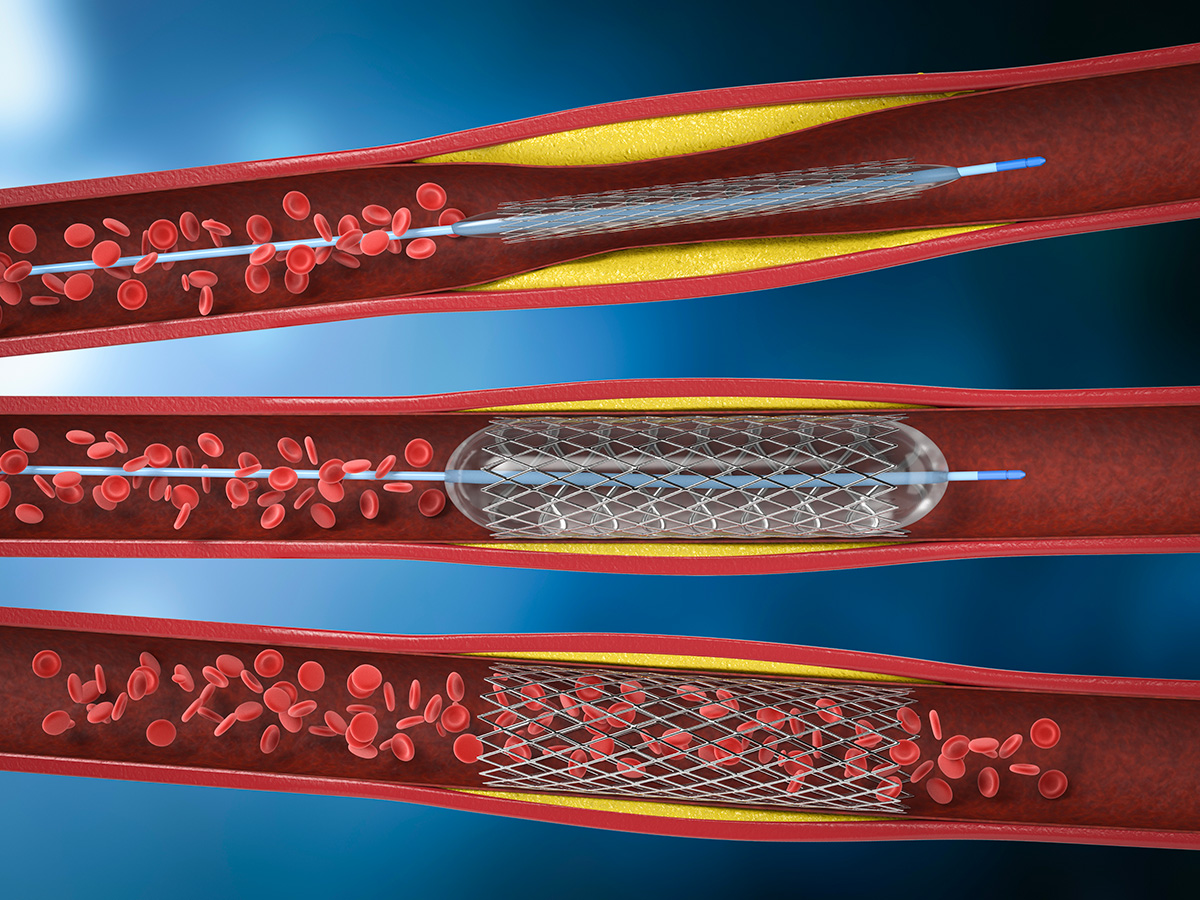
A stent is a tube made of metal mesh. It is inserted into a narrow artery to keep it open. The stent walls push against plaque that has built up in the artery causing it to narrow or block, making room for blood to pass through.1 If an artery is over 70% blocked, a stent may be used to keep it open.


What is Angioplasty (also known as PCI Percutaneous Coronary Intervention)?

Angioplasty is the name of the surgery that inserts the stent into a narrow or blocked artery. A thin, plastic, flexible tube called a catheter is inserted into either the patient’s arm or groin and guided to the site of the artery. The catheter has a balloon and stent attached and when it reaches the correct position in the artery the balloon is inflated. This makes the stent expand and push the plaque back against the artery wall. The balloon is then deflated and removed with the catheter, leaving the stent behind permanently to keep the artery open.2

Inserting a stent when a person is having a heart attack is an emergency treatment that can quickly restore blood flow to the heart and minimise any damage to the heart muscle. Its most effective when done within 90 minutes of the onset of chest pain.

Signs that you might benefit from angioplasty are suffering from symptoms such as chest pain, shortness of breath, racing heart and excess sweating due to cardiovascular disease.

Benefits of Angioplasty

Unlike open heart surgery, angioplasty is minimally invasive and only requires a small incision where the catheter is inserted. The surgery is quick (around 30 minutes to 2 hours) and usually done under local anaesthetic with a mild sedative so the patient is awake during the surgery. An incision is made in the groin, wrist or arm over an artery where the pulse can be felt. Recovery time is much quicker than open heart surgery with most people resuming their normal activities within a few days to a week.


What are the Outcomes After Angioplasty?

Over time after angioplasty, blood flow to the heart muscle will improve, which results in less or no angina symptoms. This can mean that some people are able to come off their angina medications.


Will I Need to Be on Heart Medicines After Surgery?

Yes because a stent will relieve symptoms but it won’t prevent a heart attack or stroke. It also doesn’t treat or cure heart disease or treat the underlying biological factors that cause the narrowed or blocked arteries.3

It is very important to take blood thinners as directed after surgery for potentially up to a year (e.g. aspirin, clopidogrel, dipyridamole). These medications reduce the risk of heart attacks and improve survival rates by preventing clots from blocking an entire artery if a plaque ruptures.

Patients will also need to take a statin medication long-term to reduce cholesterol. Statins block the synthesis of cholesterol because cholesterol makes plaque build-up unstable.

Heart-healthy habits like regular exercise, a healthy diet, quitting smoking and managing other health conditions are all important to support long-term success of angioplasty.

Consumer Infomation

1. https://www.heart.org/en/health-topics/heart-attack/treatment-of-a-heart-attack/stent

2. https://www.nhs.uk/tests-and-treatments/coronary-angioplasty/what-happens/

3. https://healthify.nz/health-a-z/a/angioplasty

Join New Zealand’s trusted health & wellbeing community

Access to New Zealand's largest resource of health and wellness information, with regular updates sent to your inbox. PLUS, be in to win great giveaways.
Join Us

Community

Your opinion matters! Share your thoughts with the community.

Join New Zealand's trusted health and wellbeing community

Access to New Zealand's largest resource of health and wellness information, with regular updates sent to your inbox. PLUS, be in to win great giveaways and access members-only discounts.

Join Us

This will close in 35 seconds