Pharmac now funds a range of continuous glucose monitors (CGMs) and insulin pumps for all people with certain types of insulin-dependent diabetes. This is great news for people who have been self-funding their CGMs, as well as for people with insulin-dependent diabetes who would benefit from greater control of their complex health condition.
There have been no changes to the funding for other blood testing and insulin products – these will continue to be funded.
Who can get funded CGMs?
You need to be diagnosed with one of the following:
- type 1 diabetes
- permanent neonatal diabetes (diabetes since you were born)
- some types of “monogenic diabetes” with insulin deficiency
- type 3c diabetes (includes insulin deficiency caused by pancreatectomy, insulin cystic fibrosis or pancreatitis)
- some atypical inherited forms of diabetes
If you’re not sure whether this describes your diabetes, your doctor or diabetes specialist team will be able to help.
How do I get a funded CGM?
Make an appointment to see your GP or diabetes specialist who will apply for a Special Authority number. Once this number is approved, they can write a prescription for a funded CGM. Funded CGMs are available only from a pharmacy once they have received a prescription.
You may need to call your pharmacy first so that they can order the CGM for you.
How does a CGM work?
Continuous glucose monitors measure glucose levels in the interstitial fluid (fluid around cells), sampling up to every 5 minutes.
Traditionally people have to prick their fingers and draw blood multiple times a day to monitor their blood glucose levels which is both painful and time-consuming. Fingerprick tests only provide a blood glucose measurement for a single point in time.
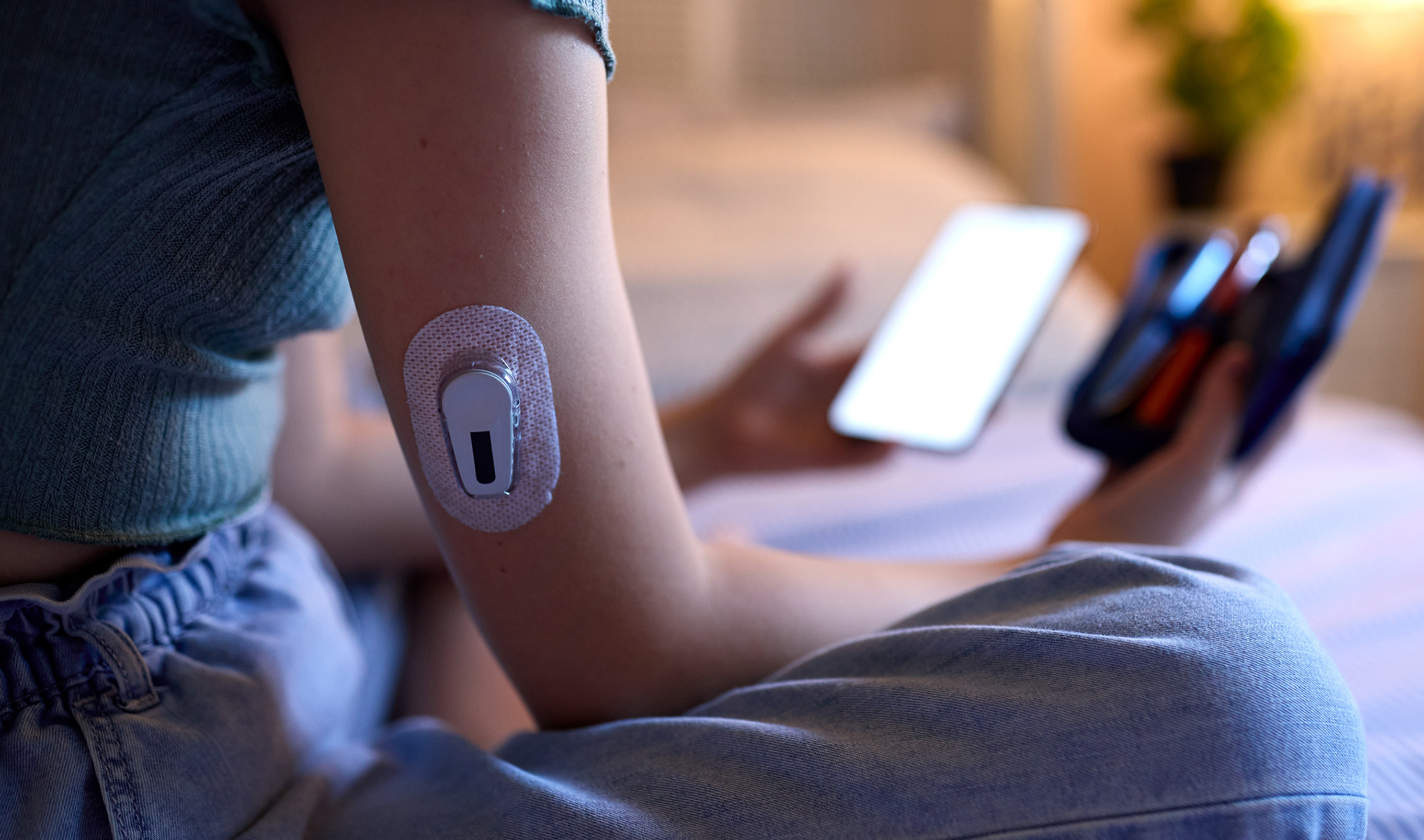
A CGM consists of three parts:
- A sensor – this is inserted under the skin. This part is disposable and needs to be changed up to every 15 days
- A transmitter – sends blood glucose readings wirelessly to a receiver. Both the sensor and transmitter are held in place by an adhesive patch on the back of the upper arm.
- A receiver – gets the results and displays them on a phone, tablet or insulin pump.
Why use a CGM?
There are so many life-changing advantages to using a CGM:
- Shows a more accurate picture of blood glucose levels throughout the day and overnight
- Shows current glucose level and predicts the direction that glucose is heading and the rate of change
- Help avoid or delay serious short-and long-term diabetes complications
- Fewer events like hyper- and hypoglycaemia occur
- Better control of the condition as you have more information on hand and can act quickly
- Provide biofeedback in real time so people can modify their diet or insulin dose
- Helps inform diabetes decisions
- Allows patient to assess glycaemic patterns and variability
- Provides alerts when glucose levels are too high or low
- Can share glucose levels with family member or healthcare team
- Ability to adjust insulin dosing based on numbers and trend arrows
- If integrated with an insulin pump, may be able to pause or adjust insulin delivery in response to a change in glucose levels.
- Provide detailed glucose metrics including time in range, time above/below range and glycaemic variability
- Data can be reviewed remotely allowing therapy changes between doctor visits.
Are there any disadvantages to using a CGM?
- May require calibration with fingerstick glucose monitor
- Can be complicated to learn how to use
- Information overload, especially when first prescribed
- Alarm fatigue – device users are repeatedly bothered by frequent and/or false alarms
- Constant presence of sensor on/in body
- Skin irritation.
Relief for kids and parents
Having a child with insulin dependent diabetes must be hugely worrying. Parents need to monitor their child around the clock. Doing blood glucose checks throughout the night can mean parents are often sleep-deprived.
Having a CGM for a child can relieve some of this burden and increase parental confidence about their child’s safety. Parents sleep better as the CGM undertakes the blood glucose monitoring throughout the night and has alerts if the child’s blood glucose goes out-of-range.
A CGM is helpful for identifying low and high blood glucose in kids who can’t recognise or express their symptoms. Kids experience more flexibility and freedom in their daily life – they can eat more freely and participate more fully in their school and social life (e.g. school trips, camps and sports).
CGMs have the ability to transform the lives of people with insulin-dependent diabetes and their families. Greater freedom, better health and an increased quality of life along with easier management of a life-threatening health condition has meant there will be many people making the switch to a CGM from October. Your pharmacist, GP or diabetes specialist can all offer advice and support on the best choice of CGM for you.[/vc_column_text][/vc_column][/vc_row]





















Community