





Dispensing Care: Challenges Facing New Zealand Pharmacists

Tracey Sullivan Pharmacy Features Writer

It’s been a tough time for pharmacy in Aotearoa New Zealand in recent months. The tragic death of baby Bellamere Arwyn Duncan in July and another two incidents of patient harm attributed to pharmacist errors have highlighted how a dispensing error can have devastating consequences for patients and their families, and leave those working in the pharmacy profession anxious and on edge. While tragedies of this scale are thankfully very rare, there is always risk involved when working with medicines.


How Do Pharmacists Minimise The Risk Of Making A Mistake?

Nearly 60 million prescription items are dispensed each year in Aotearoa New Zealand1 (around 58.5 million prescription items were dispensed in the 2023/2024 financial year). Every single one must have a clinical check undertaken by a pharmacist before it is allowed to leave the pharmacy. A clinical check can happen at the dispensary computer or at the final check of all the prescription items. This check is where the pharmacist determines if a medicine is safe and effective for a specific patient. They look at whether the medicine is suitable, the quantity is appropriate, the dose and frequency of the dose is correct as well as taking into consideration the patient’s overall health and other medicines they are taking. They will calculate if the dose is appropriate for weight if the medicine is for a child and check for side effects and medicine interactions. If anything isn’t right or is unclear, the pharmacist will contact the prescriber to clarify the prescription.

Pharmacists must have an extremely thorough checking process to ensure that errors are minimised. They are required to follow the pharmacy’s dispensing Standard Operating Procedure (SOP) which outlines the step-by-step process that needs to be followed every single time a medicine is dispensed.

As well as following robust dispensary checking systems pharmacists are ethically obliged to make sure that they are ‘fit for practice’ – meaning that they are well both physically and mentally in order to work safely as a pharmacist. Minimising interruptions, taking rest breaks when needed, and eating well are also things that add up to safe practice for a pharmacist.


What Training Is Involved In Being A Pharmacist?

Becoming a qualified pharmacist involves four years of study at university and if successful, students graduate with a Bachelor of Pharmacy degree. A year of an internship follows after university, where the pharmacy graduate works as an intern pharmacist under the supervision of another pharmacist, called a preceptor. At the end of the intern year comes a big legal and clinical exam which the intern must pass in order to gain their registration to practice as a fully qualified pharmacist.2

It doesn’t end there – all pharmacists are expected to undertake Continuing Professional Development (CPD) if they want to stay registered. This means studying in their own time and recording all of their learning which can be audited and checked to make sure it is sufficient and relevant to their practice. Once a pharmacist meets their CPD requirements each year, they are granted their Annual Practicing Certificate which means they can keep working as a registered pharmacist for another year.3

What Do Pharmacists Actually Do With A Prescription?

Ever wondered what happens after you drop your prescription in to the pharmacy or you get your prescriber to send it to the pharmacy electronically?

There are many checks involved when dispensing a prescription:

  • The prescription gets assessed for urgency – is the patient going to wait for it, or can it be processed later?
  • Does the pharmacy have the medicine/s in stock? If not, the medicine will need to be ordered which can take anything from overnight to a few days.
  • Have the legal requirements for a prescription been met by the prescriber? Is it dated correctly, contain correct prescriber details and medicine instructions?
  • Funding issues are looked at – is the medicine subsidised, does it need a specialist recommendation or a special number for it to be funded (e.g., a Special Authority number)?
  • Patient eligibility is checked, which determines the government charge assigned to a medicine.


Once all of the legal, funding and eligibility requirements have been checked, the prescription can be processed. This is the stage where the information from the prescription is entered into the dispensary computer, and labels for each medicine are printed along with a prescription receipt.

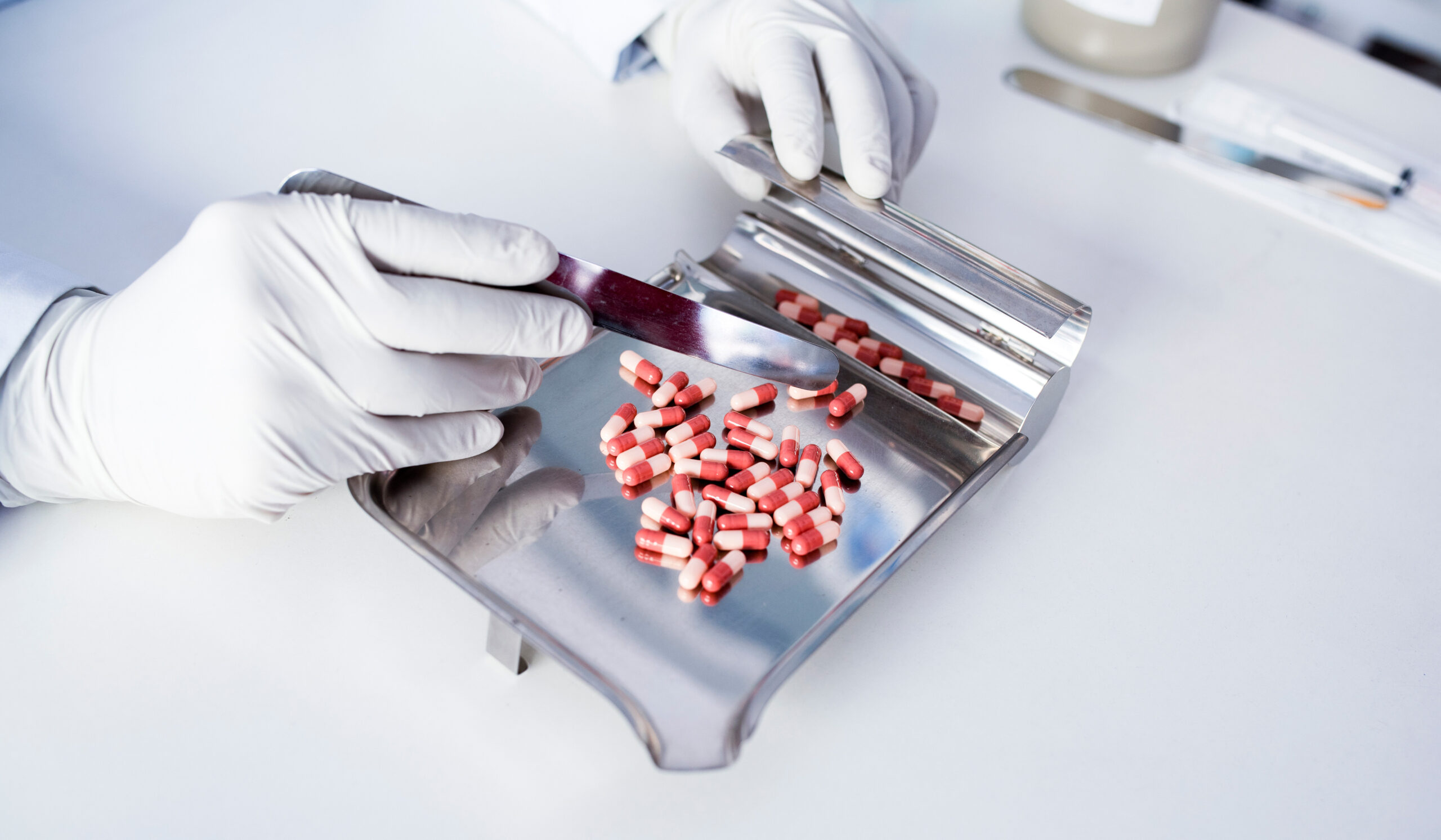
A technician or pharmacist will then dispense the medicine. The medicine is collected from the shelf, fridge, safe or other storage area, labelled and the prescription is signed to show who has packed and/or checked the medicine. If a technician has been the person to dispense the medicine, the final check of the prescription item must be signed off by a pharmacist. Some pharmacies have an extra qualified technician called an Accredited Checking Technician who is legally allowed to do the final accuracy check of all the prescription items as long as there has been a clinical check done by a pharmacist.

Once all the items on a prescription have been checked, they can be packed into a bag labelled with the patient’s name and address and then either handed to the patient or stored for later collection.

Depending on the size and staffing level of the pharmacy, a prescription item may be handled by several people before reaching the patient – someone receives the prescription from the patient at the counter, another enters the prescription in the computer and prints labels, another person collects the medicines, counts or pours the item and labels it, a clinical check is completed, and then potentially another person gives the medicines a final accuracy check. In small or rural pharmacies, it may be that a single pharmacist performs all of these tasks.


What Will Happen If There Is A Law Change?

A call to mandate that a medication is checked by two people before being dispensed has come out of the Bellamere Duncan tragedy. While this seems a simple and obvious solution in order to prevent another tragedy, the practical reality of implementing this mandate will have challenges. On one hand there would likely be an increase in patient safety by decreasing dispensing errors. On the flip side is the difficulty that some pharmacies, especially small and rural pharmacies, will have in finding another pharmacist to employ. Recruitment of pharmacists in these areas has always been difficult and could become more so with the mandate.

Many pharmacies around the country may not be able to make such a mandate financially viable, meaning there is potential for other essential services to be compromised, or even pharmacy closures or reduced hours a distinct possibility.

The responsibility of working with medicines is huge. Every pharmacist I know, myself included, genuinely cares about their patients and dreads the thought of making a mistake that could cause harm. If you ever notice anything different about your medicine after you have been to the pharmacy, please either give us a call or come back in with the medicine to see us. Sometimes a medicine changes in appearance or packaging, but if it has changed because of an error, we would all much rather know about it before the medication is taken!

Related Topics

Consumer Infomation

1. PHARMAC – https://www.pharmac.govt.nz/news-and-resources/publications/corporate-publications/year-in-review/year-in-review/top-20s/community-medicines

2. https://www.otago.ac.nz/courses/qualifications/bpharm

3. https://pharmacycouncil.org.nz/pharmacist/registration-status/


This blog provides general information and discussion about medicine, health and related subjects. The information contained in the blog and in any linked mate­ri­als, are not intended nor implied to be a substitute for professional medical advice.

Join New Zealand’s trusted health & wellbeing community

Access to New Zealand's largest resource of health and wellness information, with regular updates sent to your inbox. PLUS, be in to win great giveaways.
Join Us

Community

Your opinion matters! Share your thoughts with the community.

Join New Zealand's trusted health and wellbeing community

Access to New Zealand's largest resource of health and wellness information, with regular updates sent to your inbox. PLUS, be in to win great giveaways and access members-only discounts.

Join Us

This will close in 35 seconds